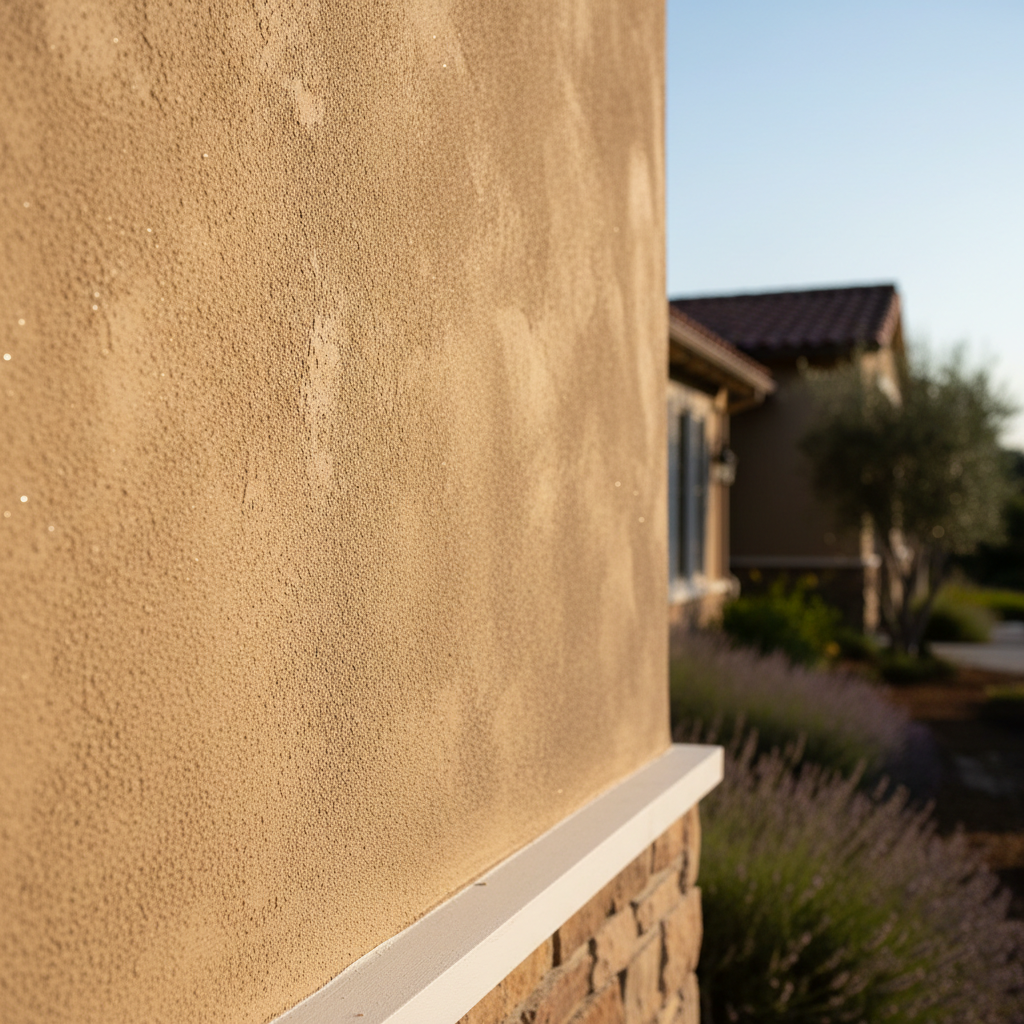
Alright, let's talk about painting stucco. I get a lot of questions from folks around Atherton about this, and it's usually because they've heard a bunch of conflicting advice or they're just not sure where to start. It's not like painting drywall, that's for sure. Your stucco home is a significant investment, and getting the paint job right protects that investment. So, I’ve put together answers to the questions I hear most often. No fluff, just what you need to know.
Do I even need to paint my stucco? What are the signs?
That's a good question. Not all stucco needs paint, especially if it's a newer synthetic stucco that's integrally colored. But for traditional cement stucco, or if your synthetic stucco is older, paint is often a good idea. The biggest signs you need a fresh coat are fading color, chalking (when you run your hand across it and get a powdery residue), or visible cracks. If you're seeing mildew or algae growth, especially on the north-facing sides of your home where it stays damp longer, paint can help protect against that too. Sometimes it's just about curb appeal, and a fresh color can make a huge difference.
What kind of paint is best for stucco? Can I just use regular exterior house paint?
Absolutely not. Don't just grab any old exterior paint. Stucco is porous, it breathes, and it moves a little with temperature changes. You need a paint that's specifically designed for masonry or stucco. I always recommend 100% acrylic elastomeric paint. Why? Because it's flexible. It can stretch and bridge hairline cracks, preventing moisture from getting in. It's also breathable, so it won't trap moisture behind the stucco, which is a big no-no. Regular latex paint can peel or crack prematurely on stucco because it's not flexible enough and doesn't bond as well to the alkaline surface. You want something that's going to last and protect, not just look good for a year or two.
What's the deal with primers? Do I always need one?
Yes, you almost always need a primer. Think of primer as the foundation for your paint job. It does a few critical things for stucco. First, it helps seal the porous surface, so your topcoat doesn't get absorbed unevenly, which would lead to a splotchy finish and require more paint. Second, it provides a consistent surface for the paint to adhere to, improving durability. Third, and this is especially important if you're going from a dark color to a light one, it helps with color uniformity. If your stucco is chalky or has efflorescence (those white powdery salt deposits), a good masonry primer is non-negotiable. It's an extra step, but it's one that saves you headaches and money in the long run.
How important is surface preparation? Can't I just power wash and paint?
Surface prep is probably the most critical part of the whole job, and no, you can't just power wash and paint. You need to clean the stucco thoroughly, usually with a power washer, but you have to be careful not to damage the stucco itself. Then, you need to let it dry completely – and I mean completely. After that, any cracks need to be repaired properly. Small hairline cracks can be bridged by elastomeric paint, but anything larger needs to be patched with a stucco patch compound. Any loose or crumbling stucco needs to be removed and repaired. If you skip these steps, your new paint job won't last, and you'll be dealing with peeling, cracking, or moisture issues down the line. It's like building a house on a shaky foundation.
How long should a good stucco paint job last in Atherton's climate?
With the right materials and proper application, a high-quality stucco paint job should last you a good 10-15 years, sometimes even longer. Our climate here in Atherton, with its dry summers and mild, wet winters, isn't as harsh as some places, but UV exposure from our abundant sunshine can still be tough on paint. That's another reason to use a premium 100% acrylic elastomeric paint; it's designed to resist fading and degradation from UV rays. If you skimp on materials or prep, you'll be lucky to get five years out of it before it starts looking tired. You get what you pay for, especially with exterior painting.
What about moisture issues? Can painting stucco cause problems?
This is a big one, and it's why I stress using the right paint. If you use a non-breathable paint, like an oil-based paint or certain types of acrylics not formulated for masonry, you can trap moisture within the stucco system. Stucco needs to be able to release moisture that gets in (and it always will, even if it's just from humidity). If that moisture gets trapped, it can lead to bigger problems like delamination, bubbling, mildew growth, and even damage to the underlying sheathing or framing. That's why Apex Stucco Solutions always emphasizes breathable, flexible coatings. We want to protect your home, not create new problems.
Should I hire a professional or can I DIY?
Look, I'm a contractor, so you might think I'm biased, but I'll give it to you straight. Painting stucco isn't a simple weekend warrior project. It's physically demanding, requires specialized knowledge about materials and application techniques, and often involves working at heights on ladders or scaffolding, especially with some of the larger homes we see around the Lindenwood area. If you're not experienced with surface prep, crack repair, and using the right sprayer for elastomeric paint (it's thick!), you can end up with a mess or a job that fails prematurely. A professional will have the right equipment, the expertise, and the insurance to do it safely and correctly. It's an investment, but it's one that pays off in longevity and peace of mind.
Hopefully, that clears up some of your questions. Painting stucco is a specialized trade, and getting it right means your home looks great and stays protected for years to come.